
Day 78 • November 23, 1994
My amazing day in Munich, Germany
Day 78 was one of the most powerful and educational days of the entire trip.
I arrived in Munich early and headed straight to Dachau, the first Nazi concentration camp, which had already been operating since March 1933. Walking through it was one of the most sobering experiences of my life. The scale of suffering was hard to comprehend, especially knowing this wasn’t some remote place — it was just outside a major German city.
While I was there, I met Eric, a South African guy who lived in what used to be the athletes’ housing for the 1972 Munich Olympics. When he casually mentioned what had happened to the Israeli athletes during those Games, I was embarrassed to admit I had almost no idea. He ended up giving me an impromptu history lesson that I’ve never forgotten.
After Dachau, Eric took me on a personal tour of Munich — the Olympic Village, the site of the hostage crisis, the Rathaus with its famous Glockenspiel, and the massive Frauenkirche. What started as a heavy, somber day slowly shifted. That evening he took me to the Hofbräuhaus, one of Munich’s oldest and most famous beer halls. Sitting there with a liter of beer and bratwurst after everything I’d seen and learned felt almost surreal — a strange but fitting way to end one of the most impactful days of the trip.
My Photographs from today at Dachau Concentration camp near Munich, Germany


Thousands of these small, pocket-sized Identification Cards were available inside the Memorial and visitors were encouraged to take one and promise to never forget.


My Photographs from today in Munich, Germany


DAY 78 / 11-23-94
My amazing day in Munich, Germany
Today has just rocked!
I arrived without a hitch, and I didn’t have any trouble making it to Dachau. Along the way, in the bus, I hooked up with a bunch of Americans. It was so nice to hear American conversation. We split up when we arrived to the camp, but I stayed with Roy, or actually he stayed with me.
Roy was a flaky flight attendant from LA. When he found out I was a photographer, he started asking me all these questions about what makes a good picture. I told him, honestly, that if it means something to you, then it’s a good picture. He then proceeded to follow me around and take every picture that I did.
The camp was one of the most sobering things I’ve ever seen. It didn’t seem real that over 200,000 people lived in a place not bigger than a few football fields, and over 31,000 people died there (and that’s only the documented ones. Thousands more went unrecorded.)
I didn’t realize that they opened in 1933 – 6 years before the war, and were designed for political prisoners and anyone opposing the Nazi regime. And in addition to these people & the Jews, it also held gypsies, minorities, homosexuals and anyone else the party deemed undesirable.
The words from Dante’s Inferno might well have been inscribed on the entrance gate “Abandon hope all ye who enter here!” The actual inscription read “Labor Means Liberty”.
And when the Nazis found out the camps were going to be liberated, 6,000 people were killed in the 2 days before it happened.*
I was there for 2 hours, and when we were waiting for the bus back, Roy started a conversation with a South African guy named Eric. We found out that he lives in what was once the athletes’ building for the ’72 Olympic Games. He asked if we’d like to see it & I was like “Hell Ya!”
When we got to his place, he felt bad because he had no beer to offer us, so he ran to the store while leaving Roy & I in his apartment alone. Talk about a trusting guy.
We sat around talking when he returned, then Roy announced he was going shopping. I stayed, & Eric explained to me the story of the ’72 Olympic hostage scandal & where it took place.**
Then he took me all around the Olympic Park, up this hill for a great view of Munich, & then back to his place. I also saw the BMW Headquarters, a giant skyscraper built in the shape of 4 cylinders.
Once home, he asked if I was hungry, & he cooked me dinner! Served with Rum & Cokes! Eric turned out to be one of the friendliest guys I’ve ever met.
After dinner we played this game from Africa, possibly the oldest in the world, called Kalaha, & did tequila shots.
We were supposed to meet Roy at a beer hall, and we left a little early so he could show me the city. I saw the Rathaus, where the Glockenspiel is, and also the Marienkirche / Fravenkirche, a monstrous church which is the burial site of Bavarian kings.
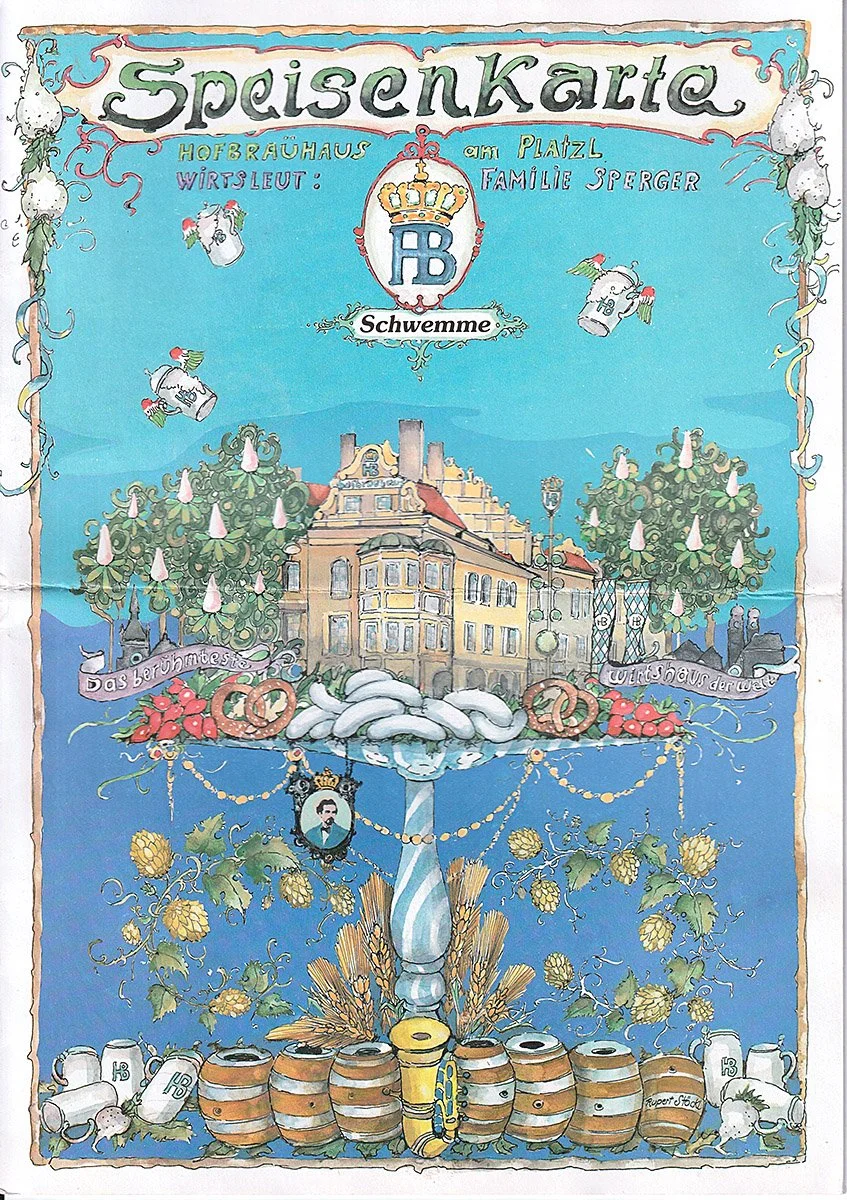
Then it was off to the Hofbräuhaus, Munich’s largest & oldest beer hall, dating from 1859. [Make that 1589!]
I had an absolute blast there. They serve beer by the liter, and there was an Om-Pah-Pah band & Eric wouldn’t let me pay for anything. He even bought me more food! Wiener schnitzels & brat-wurst. Roy did show up but only stayed for a half hour. That’s good, because I really didn’t like him anyway.
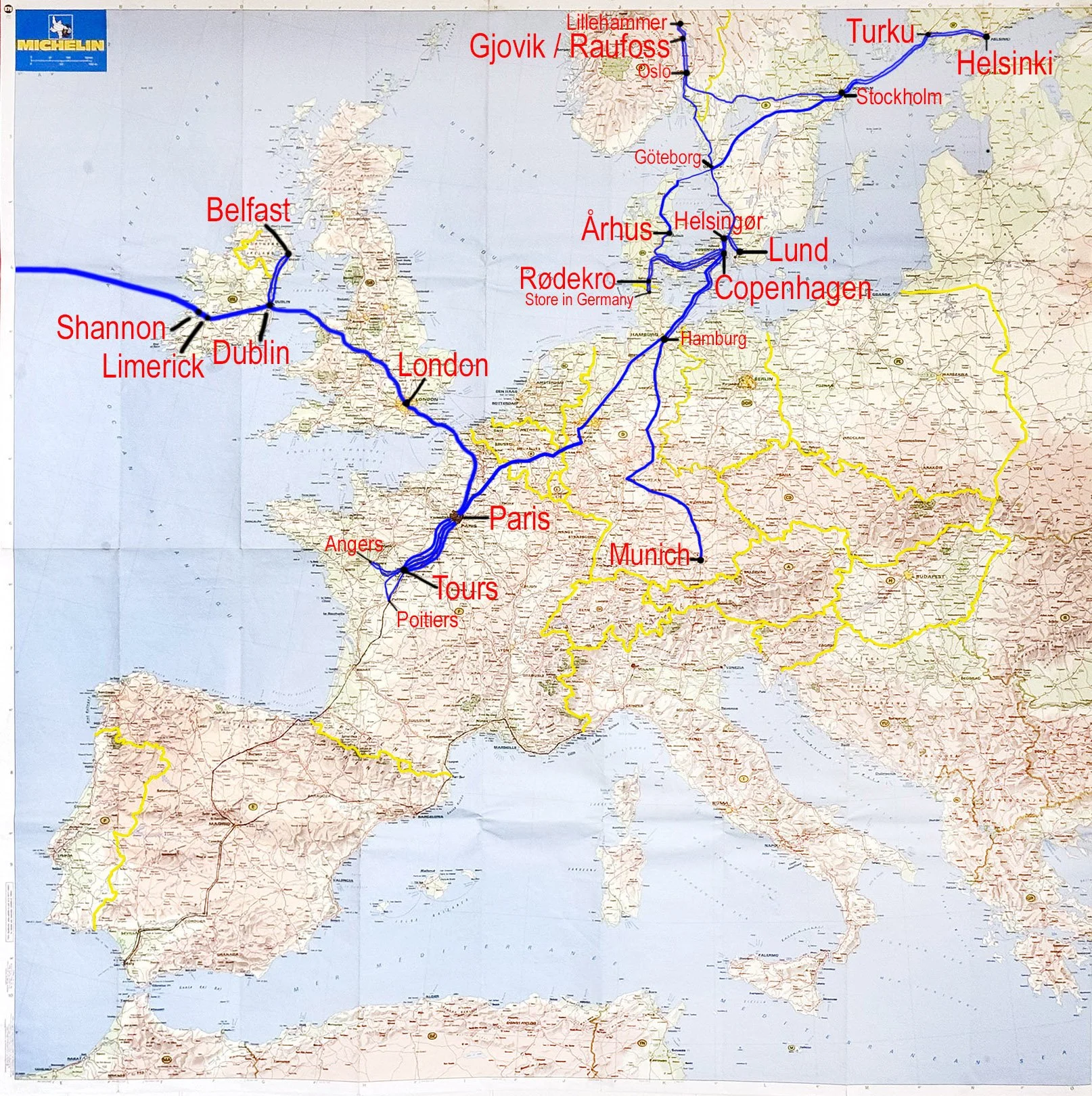
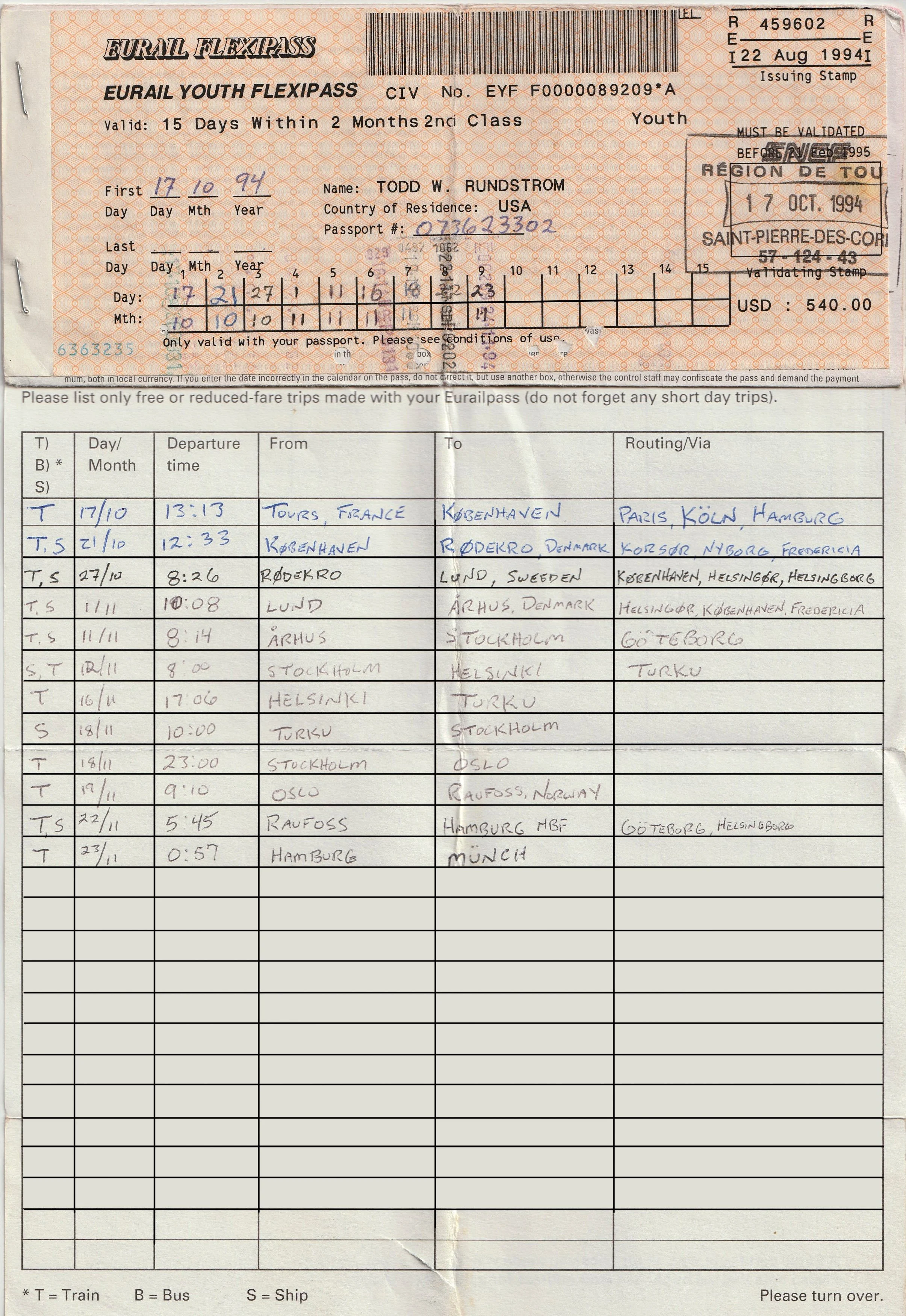
Eric & I had several beers before it was time to leave, and then he went with me to the train station. He offered to let me stay at his place, but with Julie waiting for me in Milano I figured it would be better to go.
We said our goodbyes, & I left Munich with a new friend.




Looking Back
This was one of the most powerful and sobering days of the entire trip.
Visiting Dachau was unlike anything I had experienced before. Walking through the camp where over 31,000 people died — knowing it had been operating since 1933, long before the war even started — left a deep mark on me. It was quiet, cold, and heavy. I remember standing there thinking about how something so horrific could happen in a place that looked, in some ways, almost ordinary. It was the kind of experience that doesn’t fully leave you.
Meeting Eric turned out to be one of the best surprises of the whole trip! He lived in what used to be the athletes’ housing for the 1972 Munich Olympics, and he ended up giving me one of the most important history lessons of my life. I was embarrassed to admit that I didn’t really know the details of what had happened to the Israeli athletes during those Games. Eric patiently explained everything — the hostage situation, the failed rescue attempt, and how it all unfolded right there in the Olympic Village. Learning about the Munich Massacre from someone who lived in that very place made it feel much more real.
That single day ended up being one of the most educational of the whole journey. I went from walking through a concentration camp in the morning, to learning about one of the darkest moments in Olympic history in the afternoon, to sitting in the Hofbräuhaus that night drinking beer with people from all over the world in the evening. It was a strange and intense contrast, but it somehow fit.
Looking back, I’m grateful I had that day. It forced me to confront parts of history I had only vaguely understood before. It also reminded me how much I still had to learn about the world.
Some days on this trip were about fun and adventure. Day 78 was about facing hard truths in the story of humanity.