
Day 4 • September 10, 1994
Belfast, Northern Ireland
The morning after my powerful day at Windmill Lane, I woke up early and boarded a train heading north — across the border into Belfast, Northern Ireland. Country number two for me, and I was excited to my core!
Just ten days earlier, the IRA had announced a ceasefire. The city was tense but hopeful, with British soldiers carrying machine guns on nearly every corner and armored vehicles rolling through the streets. The scars of decades of “The Troubles” were impossible to ignore.
And there I was — a 22-year-old kid from Nebraska with nothing but a backpack, a camera, and more courage than common sense — walking straight into it. I wanted to learn and photograph as much as I could in my afternoon there.
I actually walked up to armed British soldiers and asked if I could take their portraits. I wasn’t just passing through Belfast. I wanted to feel it. I wanted to understand it. I wanted to stand in the middle of history.
This wasn’t just another tourist stop. This was one of the most intense, eye-opening, and unforgettable days of my entire adventure.
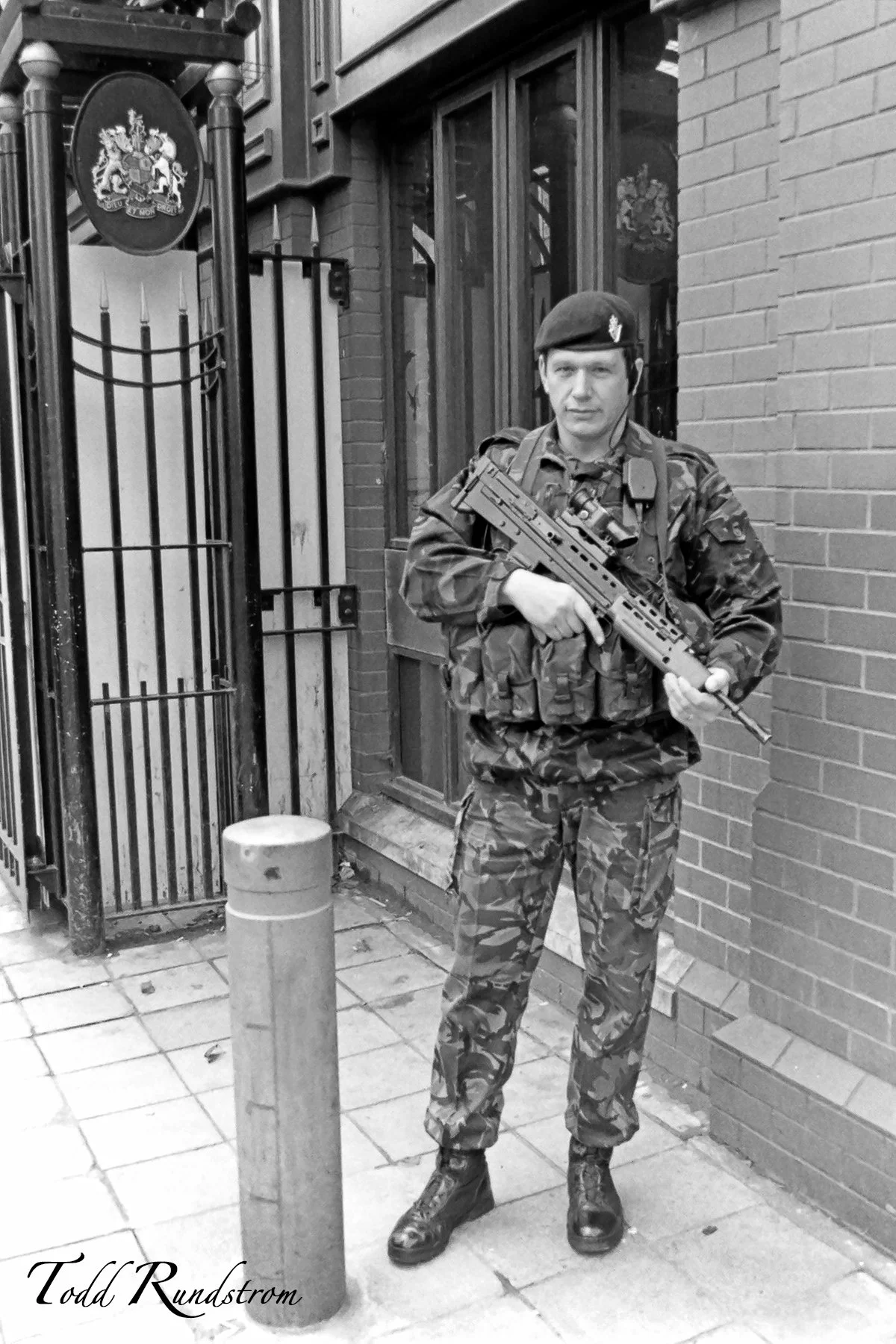
British Soldier on Guard
A British soldier stands guard in front of a courthouse that had been damaged by the IRA.
The scars of The Troubles were still very visible in Belfast in September 1994 — just days after the IRA announced a ceasefire. I was nervous but determined. I walked right up to this soldier, told him I was a young American traveling through Belfast with my camera, and asked if I could take his portrait. To my surprise, he agreed. In the few moments I visited with him, I asked him what he was doing there. I remember feeling calmer when he said he was there to protect people.
Looking back, I’m still amazed at the boldness of that 22-year-old kid from Nebraska — standing face-to-face with an armed soldier in the middle of a city still healing from decades of conflict.
This single image captures the tension and the fragile hope of that moment better than any other.
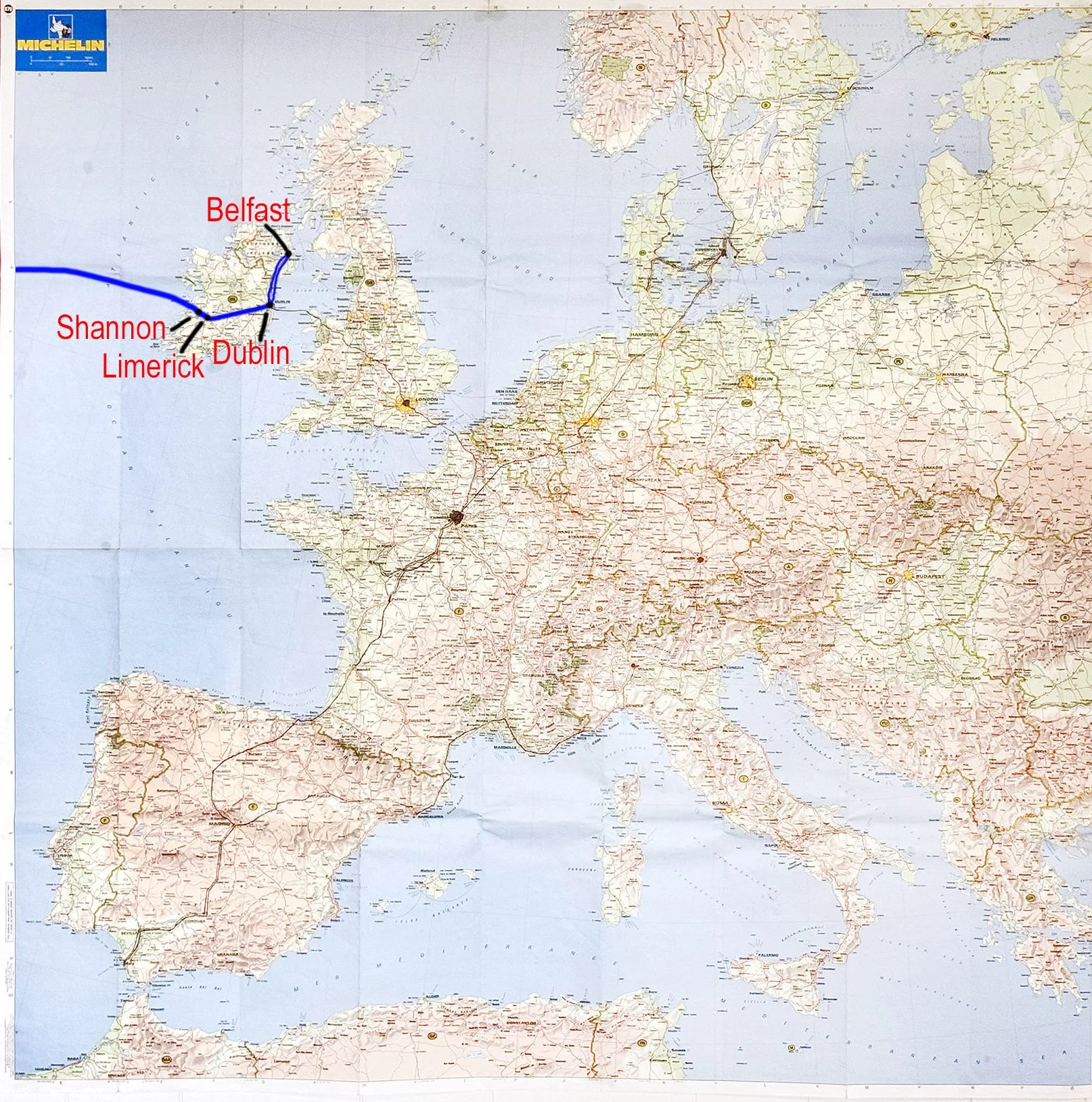
My Photographs from today in Dublin and Belfast


Day 4 / 9-10-94
A Day in Belfast, Northern Ireland
The day is not actually over yet, but I have some time, and I don’t foresee anything too exciting happening later.
Today has run extremely smoothly for me. I woke up on time at 6:50, dressed, ate breakfast, and made it to the station for the 7:55 train to Belfast.
Everyone seems very upbeat about the IRA (Irish Republican Army) ceasefire of 10 days.
Belfast seemed very normal as I walked around until an armored personnel carrier drove by. It really scared me - I don't know why, but it did.
And then, as I turned the corner, I saw a soldier standing post with a nice big machine gun. I ended up going and talking to the soldier, who turned out to be very pleasant.
“It's still business as usual for us,” he said when I asked about the ceasefire.
I was eventually able to take his photo and that of another soldier a little farther away.
Here is what is weird though: in Dublin I felt uneasy because the police didn't carry any guns at all. I wanted to laugh at them. But in Belfast, I felt uneasy because I thought the authorities were too well armed. I mean, machine gun posts on street corners?
Something you don't see in America. But then again, I didn't see any headlines here proclaiming gang murders, kids killing kids, drive by shootings, etc. It leads to a lot of deep thinking.
Anyway, here's another episode of “Todd getting free stuff”. I was getting very thirsty, so I stopped in a pub called The Morning Star, which, it happened to turn out, was one of the original pubs in Belfast, dating back to the 1840s.
I started a conversation with a couple by asking if most people in Northern Ireland consider themselves British or Irish. British, they said.
They asked what I was drinking, and I replied water. Brian then jumped up to get me a drink. While he was gone, I explained to Mary, his wife, that the reason I was drinking water was because I didn't change any money to British pounds, since I was only going to be there five hours.
Brian then returned with my water - not regular tap water, but some expensive Perrier water. But Mary explained my situation, saying “Brian, he doesn't really want water, he just doesn't have any money.”
So Brian went and bought me a pint of beer. Then as if that wasn't enough, they gave me £3 so I could get something to eat or drink before I left.
I stopped in at two other pubs on the way back to the station to spend my money!
I got the 3:00 train and was back in Dublin by 5:15. I walked back to the hostel, collected my pack, hopped on a bus, and am now in the city’s main bus station, awaiting my trip to London and then on to Tours!
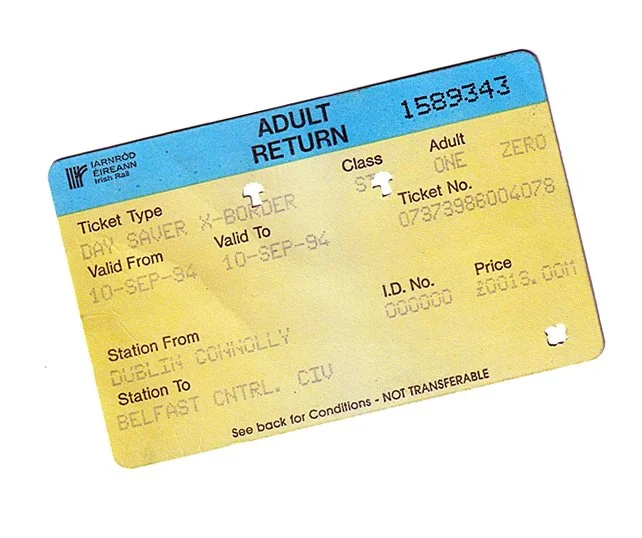
My round trip train ticket from Dublin Connolly Station to Belfast Central Station.
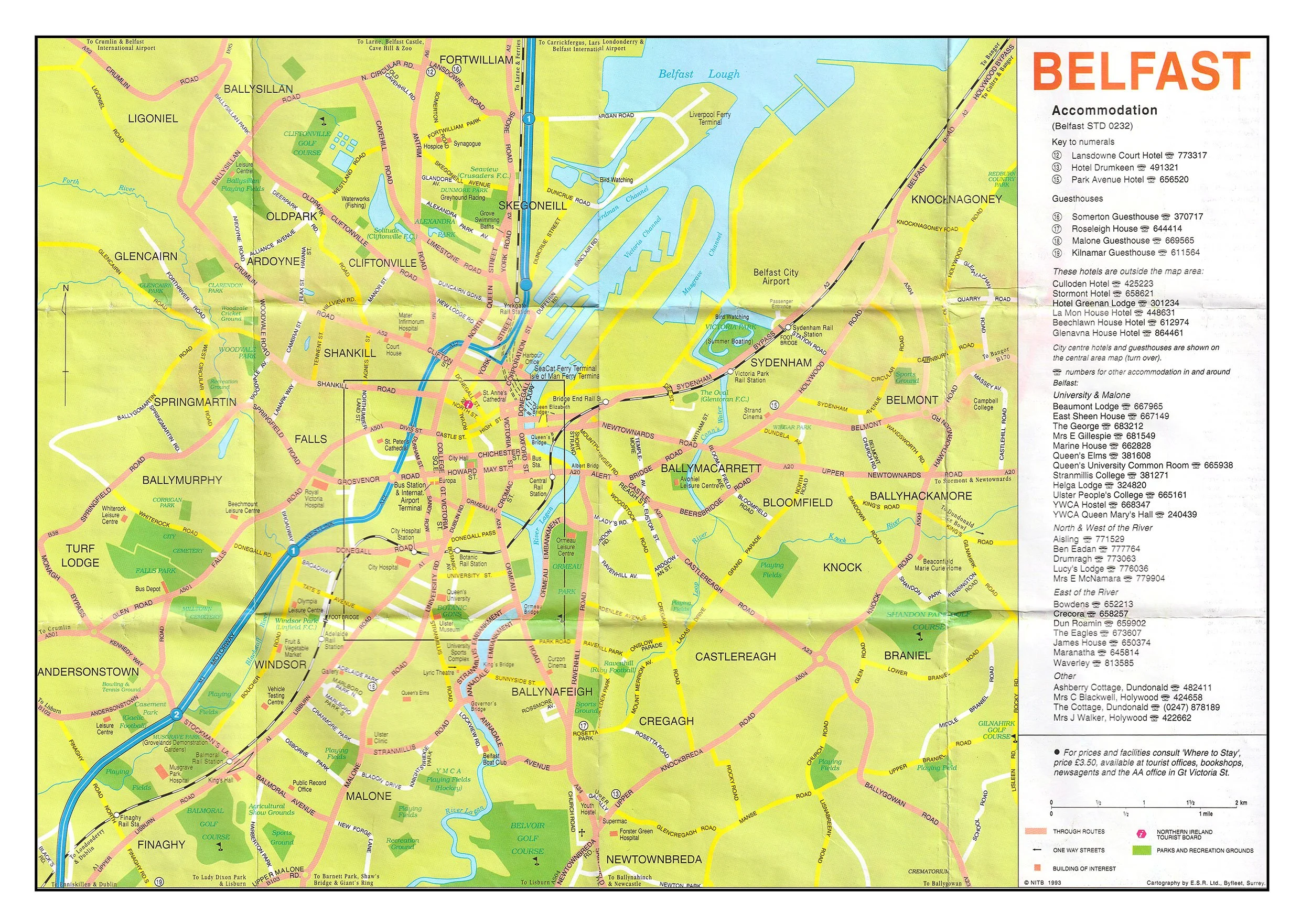
My Map of Belfast
This is the actual map I carried with me the entire day I spent in Belfast on September 10, 1994. You can still clearly see the crease lines from where I folded it and kept it in my pocket. I pulled it out constantly that morning — checking street names, figuring out which direction to walk from the train station, and later finding my way back.
It’s one of those small, ordinary objects that became meaningful simply because it traveled with me through that day. Thirty-two years later, the fold marks are still there, just like the memories of walking these streets.
Looking Back
I was in Belfast on September 10, 1994 — just ten days after the IRA announced its historic ceasefire. At the time, no one knew if it would last. The city still felt raw and heavily militarized. Armored vehicles rolled through the streets. Soldiers stood on corners with machine guns. And yet, the people I met were kind. They bought me drinks in an old pub. They gave me money for food. They stopped to help a stranger asking for directions. Looking back, it was almost as if they were relieved to be showing me the grace they were longing for in their world.
I had no idea I was standing at the very beginning of the end of The Troubles.
The conflict had already lasted nearly thirty years and claimed over 3,500 lives. Just four years after my visit, in April 1998, the Good Friday Agreement was signed, creating a fragile but real path to peace. Four months later, the Real IRA carried out the Omagh bombing, killing 29 people. It was the last major terrorist attack of that era.
Since Omagh, Northern Ireland has not experienced anything close to the sustained violence that defined The Troubles. The daily reality of bombings, shootings, and military checkpoints has largely disappeared. Today, Belfast is a vibrant, confident city. Thousands of tourists now pay to take Black Taxi tours to the Peace Walls — the very barriers that once divided communities. What was once a desperate security measure has become one of the city’s biggest attractions.
U2 still sings “Sunday Bloody Sunday” in concert. They should. Some things must never be forgotten. However, on their 2000 album All That You Can’t Leave Behind, U2 has a quiet track called “Grace.” One verse has stayed with me for years:
What once was hurt
what once was friction
What left a mark
no longer stings
Because Grace makes beauty
out of ugly things.
That line feels like it was written for The Troubles. And if I’m honest, it feels like it was written for me too.
I’m grateful I was there when I was. I’m grateful I made the deliberate choice to get off the train and spend those five hours in Belfast instead of staying safely in Dublin. I walked the streets with my camera, talked to soldiers, accepted kindness from strangers, and documented a city caught between its violent past and an uncertain future.
I left with photographs, journal entries, and a deep sense that I had witnessed something rare — the first fragile signs of peace taking root in real time.
I’m truly glad they found peace.
And, thank God, I am equally glad that I have found peace in the years since too.